
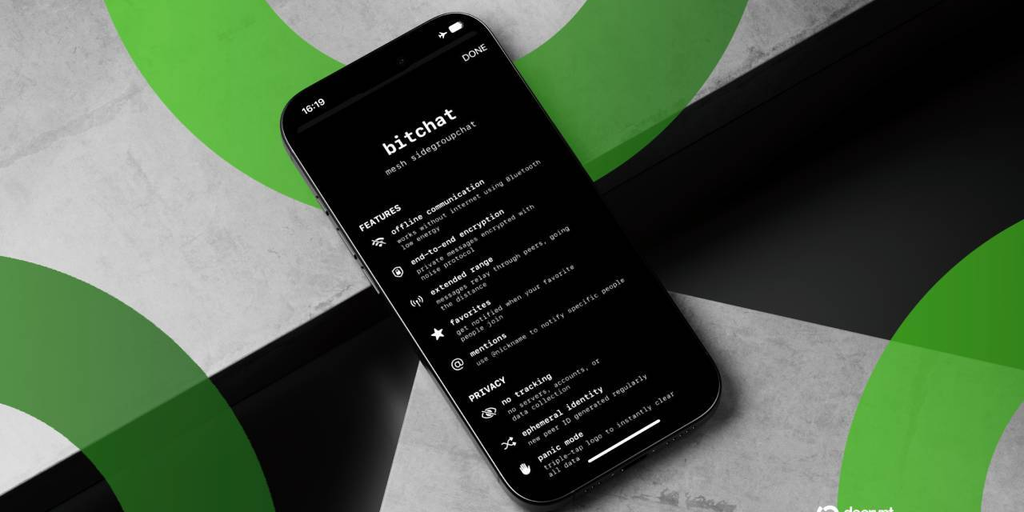
The Digital Battlefield: India Targets Jack Dorsey's Bitchat on GitHub
The recent directive from the Indian government, ordering GitHub to remove code repositories associated with Jack Dorsey's "Bitchat" project within a stringent three-hour deadline, marks a pivotal moment in the ongoing global struggle between state authority and the burgeoning world of decentralized technology. Citing the messaging app's utility during periods of protest-related internet shutdowns, this action transcends a simple content takedown; it’s a direct confrontation with the principles of open-source development, censorship resistance, and the very architecture of a free internet.
As a Senior Crypto Analyst, this incident underscores fundamental truths about the vulnerabilities of centralized platforms and validates the core tenets driving the development of Web3. It highlights why truly decentralized, self-sovereign systems are not merely technological aspirations but increasingly vital necessities in an era of escalating digital control.
Bitchat's Promise: Circumventing Censorship in Times of Crisis
While specific technical details of “Bitchat” remain somewhat elusive, its targeting by Indian authorities provides crucial insight into its perceived capabilities. The context – its use during protest-induced internet shutdowns – strongly suggests a design ethos centered around resilience and censorship resistance. Such applications often leverage peer-to-peer (P2P) communication, mesh networking, or other decentralized architectures that allow users to communicate even when traditional internet infrastructure is throttled or entirely cut off. For protestors seeking to organize and share information in the face of state-imposed communication blackouts, tools like Bitchat become indispensable lifelines. From the state's perspective, however, these very features represent a threat to control, enabling the very dissent they seek to suppress.
This scenario perfectly illustrates the value proposition of many decentralized communication protocols emerging from the Web3 space. Projects like Nostr, Signal, or even the underlying principles of secure, encrypted, and peer-to-peer data exchange common in the crypto world, are designed precisely to offer alternatives when centralized communication channels are compromised or controlled. Bitchat, in this context, embodies the spirit of these efforts, positioning itself as a tool for digital freedom in oppressive environments.
GitHub's Quandary: A Centralized Hub Under Pressure
The order to GitHub places the Microsoft-owned platform in an unenviable position. As the de facto global repository for open-source code, GitHub is a centralized entity operating across myriad jurisdictions, each with its own laws and censorship demands. Complying with such directives, especially those targeting projects designed for censorship resistance, fundamentally clashes with the open-source ethos of free information and collaborative development.
This incident exposes a critical vulnerability: even projects with decentralized aspirations often rely on centralized infrastructure for their development, hosting, and distribution. GitHub's role as a choke point means that a state can effectively suppress the *code* for a decentralized application, even if the *application itself* might be resilient once deployed. For developers globally, this creates a chilling effect, raising questions about the security and longevity of their projects on such platforms. It also accelerates the search for truly decentralized code hosting solutions, such as those leveraging IPFS, Radicle, or other distributed version control systems, thereby pushing the Web3 ecosystem towards greater self-sufficiency.
India's Digital Control: A Precedent of Shutdowns and Takedowns
India’s directive regarding Bitchat is not an isolated incident but rather fits into a broader pattern of the nation-state's increasing assertiveness in managing its digital landscape. India has a well-documented history of imposing internet shutdowns, particularly during periods of civil unrest or protests, often citing national security or public order. The country also frequently issues takedown notices to social media platforms and content hosts, demanding the removal of posts, accounts, or applications deemed to be inflammatory or disruptive.
This aggressive stance reflects a growing global trend where governments seek to extend their sovereign control into the digital realm, often clashing with international norms of free expression and the borderless nature of the internet. The targeting of a tool like Bitchat, specifically designed to bypass such state controls, signals a direct escalation in this digital arms race, where technological innovation for freedom is met with intensified regulatory and executive action.
Jack Dorsey's Vision Tested: The Reality of Decentralization
Jack Dorsey, a prominent figure in the crypto space, has been a vocal proponent of decentralized internet protocols, investing heavily in Bitcoin, Nostr, and the Bluesky social protocol. His vision champions an internet where control is wrested from centralized corporations and states, returning power to individual users. The Bitchat incident, whether a direct Dorsey project or one inspired by his ethos, is a real-world test of this vision.
It starkly illustrates the immense challenges in building truly censorship-resistant systems. While the *idea* of decentralization is powerful, its practical implementation requires overcoming significant hurdles, including reliance on traditional DNS, hosting providers, or app stores. The GitHub takedown demonstrates that even if a protocol is decentralized, its development infrastructure might still be vulnerable to centralized pressure. This incident will undoubtedly fuel further innovation within the Web3 community to create development and distribution pipelines that are as resilient as the protocols they aim to serve.
The Crypto Analyst's Imperative: Building True Digital Sovereignty
For the crypto and Web3 community, this incident serves as a stark, unequivocal validation of our core mission. The drive to build decentralized finance, self-sovereign identity, and censorship-resistant communication platforms isn't theoretical; it's a response to very real, ongoing threats to digital freedom and human rights. India’s action against Bitchat underscores the vital necessity of truly robust, distributed infrastructure that cannot be unilaterally shut down, censored, or controlled by any single entity, be it a corporation or a state.
This moment calls for intensified focus on developing technologies that facilitate sovereign digital experiences: peer-to-peer communication networks, decentralized autonomous organizations (DAOs) for governance, robust Layer-2 solutions for scalability and privacy, and, crucially, truly decentralized hosting and distribution mechanisms for code and data. The economic and social prosperity of nations in the digital age will increasingly depend on their citizens' ability to communicate freely and participate without fear of arbitrary censorship or shutdown. This incident is a powerful reminder that the fight for digital sovereignty is far from over, and the tools of decentralization are our strongest defense.
The Battle for the Digital Commons: A Global Reckoning
The India-GitHub-Bitchat saga is more than a localized dispute; it's a microcosm of a global reckoning over who controls the digital commons. As nation-states increasingly assert their digital sovereignty, the tension with the inherently borderless and permissionless nature of decentralized technologies will only intensify. This incident sets a dangerous precedent for open-source development and digital rights worldwide.
The imperative for the Web3 community is clear: accelerate the development of truly resilient, decentralized alternatives that can withstand such pressures. The future of free expression, economic inclusion, and human rights in the digital age hinges on our collective ability to build an internet that is genuinely beyond the reach of centralized control. The three-hour deadline India imposed on GitHub is not just a demand for code removal; it's a wake-up call for everyone committed to a free and open digital future.