
Introduction: Navigating a Volatile Landscape
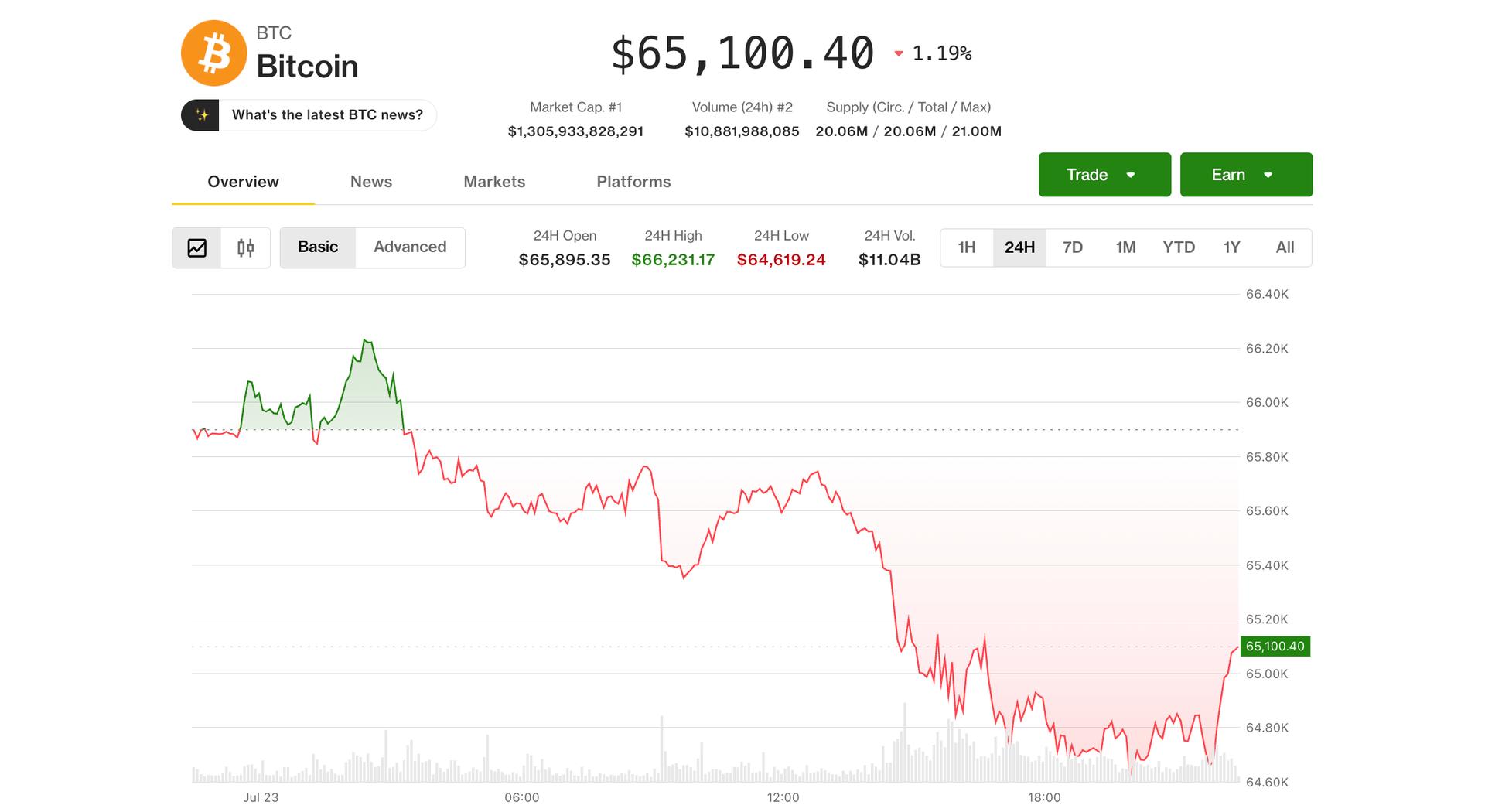
Global financial markets are navigating a complex tapestry of geopolitical anxieties and sector-specific concerns, testing even resilient assets. Bitcoin, often debated as a digital safe haven or high-beta tech play, finds itself in these turbulent waters, holding tenuously near $65,000. The latest market downturn, characterized by slumping stock indices, points to escalating tensions in the Middle East following reports of an expanded Iran war and simmering worries about the sustainability of AI-driven corporate spending. Yet, amidst this gloom, a surprising revenue beat from chipmaker Intel offered a momentary glimmer, underscoring the nuanced and often contradictory signals defining today’s market.
Geopolitical Headwinds: The Shadow of Conflict
The specter of an expanded conflict in the Middle East has cast a long shadow over global risk assets. Reports indicating a potential broadening of the Iran war have immediately translated into heightened geopolitical risk premiums, impacting energy markets and prompting a flight to safety in traditional havens like the U.S. dollar and government bonds. For equity markets, this scenario typically implies increased uncertainty, supply chain disruptions, and a potential dampening of global economic growth, leading to widespread selling pressure. Bitcoin, which has increasingly demonstrated a correlation with broader risk assets, particularly high-growth tech stocks, has not been immune to this sentiment. While some proponents argue for its uncorrelated nature, its recent price action suggests it remains intertwined with prevailing risk-on/risk-off dynamics. Investors de-risking across portfolios often pull capital from speculative assets like Bitcoin during acute fear, challenging its safe-haven narrative.
Tech Sector Wobbles & AI Spending Concerns
Compounding the geopolitical unease is a renewed scrutiny of the tech sector, particularly concerns surrounding the future trajectory of AI spending. After an extraordinary run fueled by the artificial intelligence boom, a bruising session for tech stocks highlighted investor anxieties about potential overvaluation and the sustainability of current growth rates. While the long-term potential of AI remains undeniable, there are growing questions about the immediate-term capital expenditure cycles and return on investment for hardware and software providers. This apprehension led to a broader retreat from tech equities, impacting market leaders and smaller players alike. Given Bitcoin’s increasing institutional adoption and its perception among a segment of investors as a ‘digital growth asset,’ a downturn in the traditional tech sector invariably creates headwinds for the crypto market, challenging its narrative as a distinct asset class.
Intel's Silver Lining: A Momentary Reprieve
Against this backdrop of apprehension, chipmaker Intel delivered a much-needed shot in the arm for market sentiment. Its reported revenue beat provided a welcome counter-narrative, suggesting that not all corners of the technology sector are succumbing to the broader AI spending concerns. Intel's performance, particularly if indicative of robust enterprise demand for computing infrastructure, could signal an underlying resilience in specific segments of the tech industry. While one company's earnings report doesn't negate systemic concerns, it serves as a reminder that market dynamics are rarely monolithic. This positive news offered a brief reprieve, helping to ease some of the selling pressure that had plagued tech stocks. For Bitcoin, such positive news from the tech sector can act as a stabilizing force, preventing a more precipitous decline by tempering overall risk aversion, reinforcing the idea that innovation and demand in the tech space continue.
Bitcoin's Position: Vulnerability Meets Resilience
Amidst these conflicting currents, Bitcoin has demonstrated a peculiar mix of vulnerability and resilience, holding near the critical $65,000 level. This price point has acted as a significant psychological and technical support zone, preventing a deeper capitulation despite macro headwinds. The immediate slide reflects the broader de-risking observed across markets, suggesting that in times of acute fear, Bitcoin is treated as a risk-on asset by a substantial portion of the institutional capital that has flowed into the space, particularly through the Spot Bitcoin ETFs. The narrative around Bitcoin’s halving event continues to offer underlying fundamental support, but macro factors appear to be overshadowing this event-driven optimism in the short term. While sustained demand from new institutional vehicles is significant, it's clearly not enough to completely decouple Bitcoin from broader market sentiment. Analysts are keenly watching whether Bitcoin can establish a stronger base or if persistent macro pressure will force a retest of lower support zones.
Correlation vs. Decoupling: An Ongoing Debate
The market's reaction to the latest events reignites the perennial debate regarding Bitcoin's correlation with traditional finance versus its potential for true decoupling. Historically, Bitcoin often moved independently, driven by its unique supply-demand dynamics and narrative as "digital gold." However, with the increasing institutionalization of crypto markets, spurred by products like the Spot Bitcoin ETFs, its price movements have shown a heightened sensitivity to macro indicators and equity market performance. When geopolitical tensions escalate or tech stocks face a downturn, Bitcoin tends to follow suit, behaving more like a high-growth tech stock than an uncorrelated safe haven. This trend suggests that a significant portion of the capital now invested in Bitcoin views it through a traditional risk-asset lens. While the long-term vision of decentralization remains, the short-to-medium term reality points to a strong interplay with global economic and political sentiment. For now, it remains largely intertwined with the broader financial ecosystem.
Analyst's Outlook: Navigating Uncertainty
The current market environment presents a complex challenge for Bitcoin investors. The interplay of escalating geopolitical tensions, nuanced tech sector sentiment, and Bitcoin’s ongoing institutionalization creates a landscape fraught with both risk and opportunity. While Intel's strong earnings offered a brief respite, underlying concerns about broader market stability and AI spending sustainability remain potent. Bitcoin's ability to hold near $65,000 amidst these headwinds showcases a degree of underlying demand and resilience, likely supported by the halving narrative and persistent ETF inflows. However, its susceptibility to global risk-off events indicates that it is still firmly rooted within the broader risk asset category for institutional players.
Looking ahead, investors should closely monitor several key indicators: the trajectory of the Middle East conflict, upcoming tech earnings reports for further clues on AI spending, and the Federal Reserve's stance on interest rates. For Bitcoin specifically, maintaining the $65,000 support level is crucial. A break below this could signal further downside potential, while a sustained push above $68,000-$70,000 would indicate renewed bullish momentum capable of overcoming macro pressures. The digital asset market continues to mature, but its journey remains inextricably linked to the complexities of the global financial stage. Prudent analysis requires acknowledging these correlations while also appreciating Bitcoin's unique fundamental drivers. The coming weeks will be pivotal in determining its short-term trajectory.